How to Find KDP Niches, Step by Step
Updated By the ColorCraft team6 min read
Short answer
To find a KDP niche, write the idea as an audience, a theme and an angle, then look at the paperbacks already selling for that phrase on Amazon. A good niche has several books holding a strong sales rank, including some recent ones from small publishers, and no licensed characters holding the top spots. You can do this by hand in about 20 minutes per idea, or let a research tool read the same signals for you.
Key takeaways
- A niche is a specific buyer plus a specific book, not a broad topic like “animals”.
- Look for demand and room: books holding strong ranks, and recent small publishers among them.
- Use a 90-day view of rank where you can. One day’s rank can mislead.
- Big publishers or licensed characters at the top usually mean the demand isn’t open to you.
- Seasonal niches need publishing weeks ahead of the peak.
- KDP now allows 2 new titles per format a week, so choosing well matters more than publishing a lot.
What is a KDP niche?
A niche is a group of buyers looking for one specific kind of book. “Coloring book” is a category. “Bold and easy coloring book for adults” is a niche, because you can picture who buys it, what it looks like and what they would type into Amazon.
Picking one has become more important. KDP now limits accounts to 2 new titles per book format each week, so publishing a large number of untested books is no longer an option. Each title has to earn its slot.
How do you find a KDP niche by hand?
You don’t need any tool for this. It takes a spreadsheet and some patience.
Write the idea as audience, theme and angle
For example: kids aged 4 to 8, dinosaurs, doing everyday jobs. If you can’t name who buys it, narrow it.
Search Amazon the way a buyer would
Type the phrase into the Books department, filter to paperback, and open the first page of results in new tabs.
Write down each book’s rank
Scroll to Product details on each of the top 10 to 20 books and note its Best Sellers Rank, publication date, price, page count and review count.
Count the strong ranks
Count how many hold a rank under about 100,000. One or two strong books can be a fluke; many strong books show real demand.
Look for newcomers
Count the books published in the last 12 months that hold a good rank, and check whether they come from small publishers. That is your proof someone new can get in.
Check who holds the top
Drop the idea if big publishers or licensed characters hold most of the top spots.
Read the reviews
Look for repeated complaints in the top books, such as thin paper, too much detail or repeated images. Each one is a way to make a better book.
Rank is the number to pay attention to, and it has traps. What BSR means, and how to read it explains why a single reading can be wrong by a long way, and the book sales calculator turns an average rank into a rough range of copies. For the money side of each idea, the free KDP royalty calculator shows what a copy earns at a given price and page count.
What does a good niche look like?
| Signal | Good sign | Warning sign |
|---|---|---|
| Strong ranks | Many hold a rank under 100,000 | Only the first one or two do |
| Newcomers | Books from the last year hold a good rank | Everything strong is years old |
| Who publishes | Small and independent publishers hold many spots | Big publishers hold most spots |
| Licensed characters | None in the top books | Film, TV or game characters at the top |
| Reviews | Top books have repeated, fixable complaints | Thousands of reviews and few complaints |
| Timing | Sells all year, or you can publish well before the peak | The peak is days away |
Don’t reuse a character, logo or brand you don’t own, however well it sells. KDP’s intellectual property rules apply, and that demand isn’t open to a new book anyway.
What do real niches look like when you check them?
Four real checks from Niche Research, read on November 7, 2026 for Amazon US paperbacks. These readings change as ranks change, so treat them as examples of how to read a niche, not a list of what to publish.
| Niche | Verdict | What drove it |
|---|---|---|
| bold and easy coloring book | Strong | A typical rank of 3,579 among the leaders, and 3 newcomers broke in this year |
| dinosaur coloring book | Open | 16 of 25,800 books with those words in the title hold a rank under 100,000; 5 from the last year hold a good rank, all self-published |
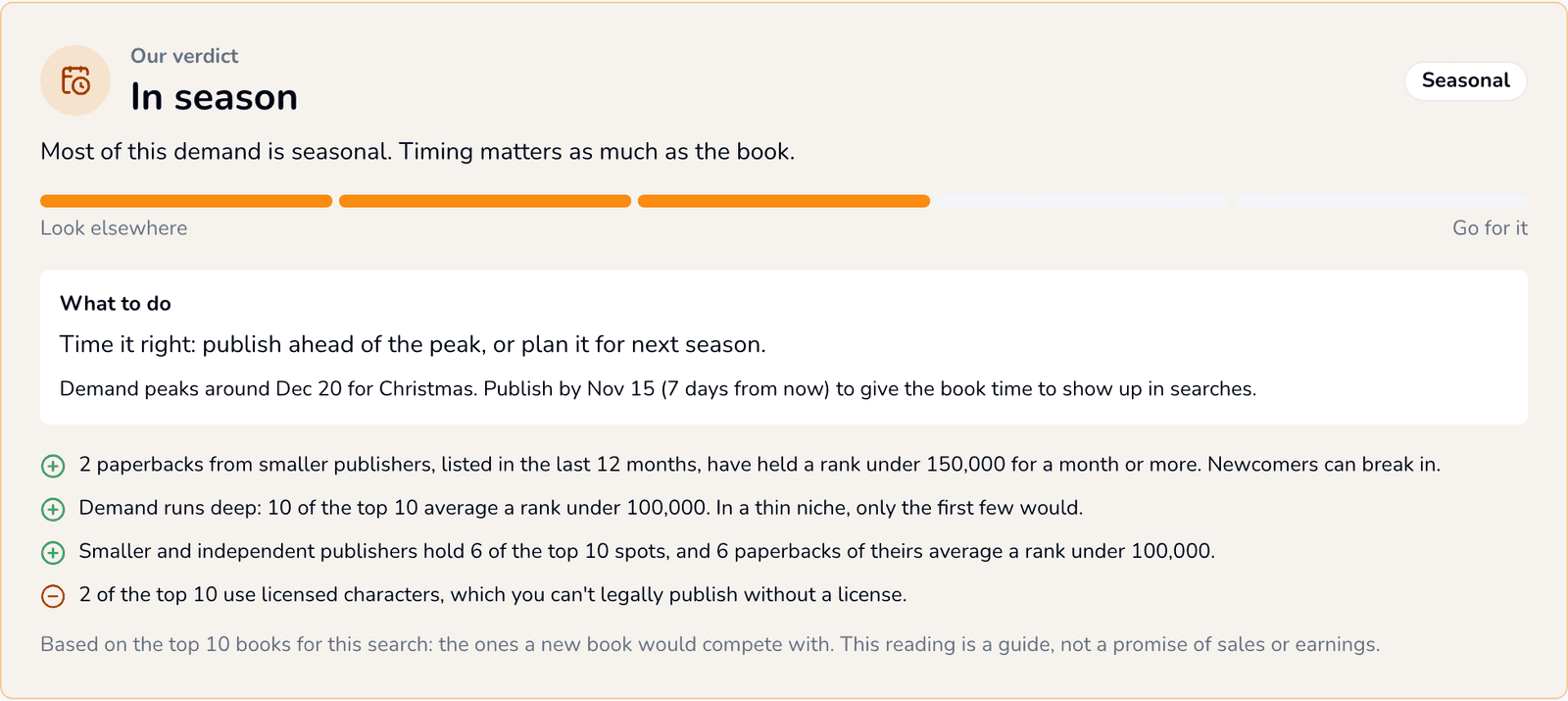
| christmas coloring books | In season | All of the top 10 rank under 100,000, but demand peaks around December 20, and 2 of the top 10 use licensed characters |
| hidden pictures puzzle book for kids | Competitive | Big publishers hold 15 of the top 20 spots |
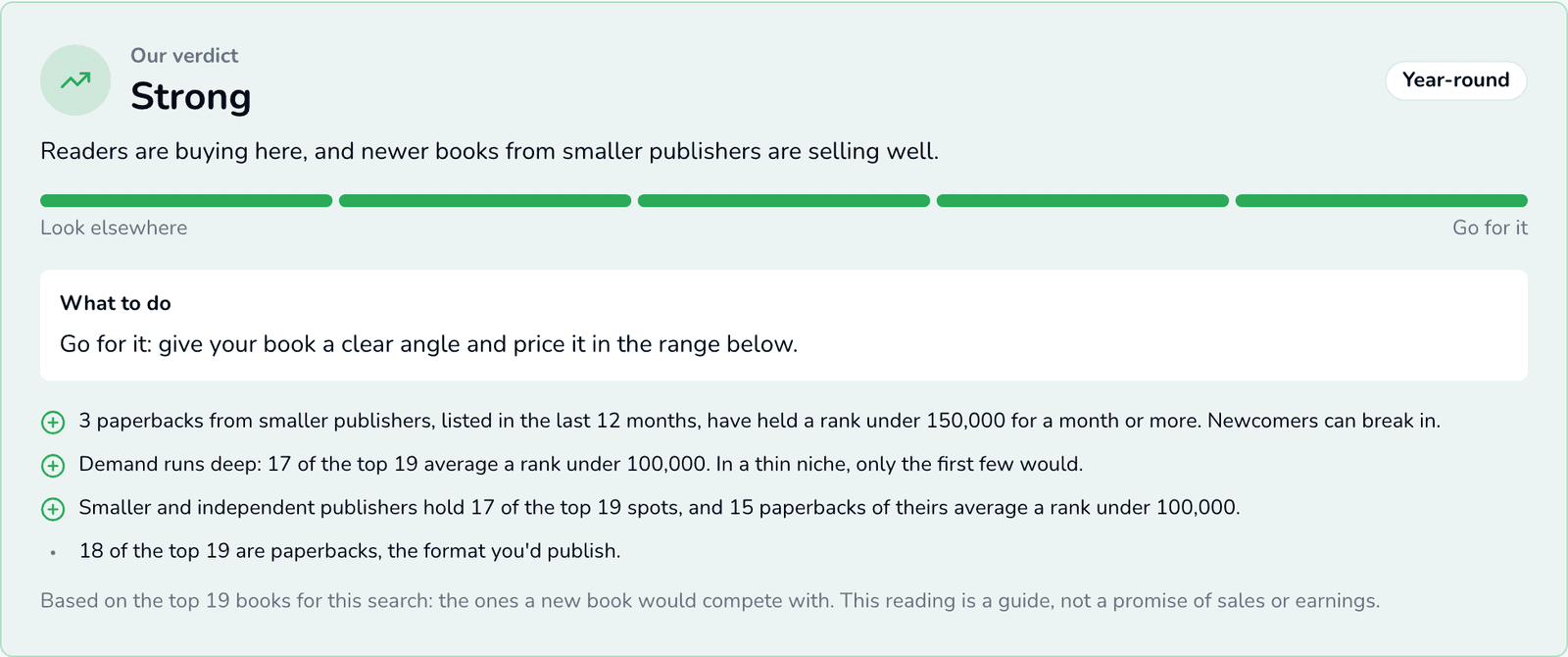
The dinosaur numbers are the useful surprise: almost none of the 25,800 titles hold a strong rank, yet recent self-published books do. A niche can be crowded and still open, as long as most of the crowd isn’t selling.
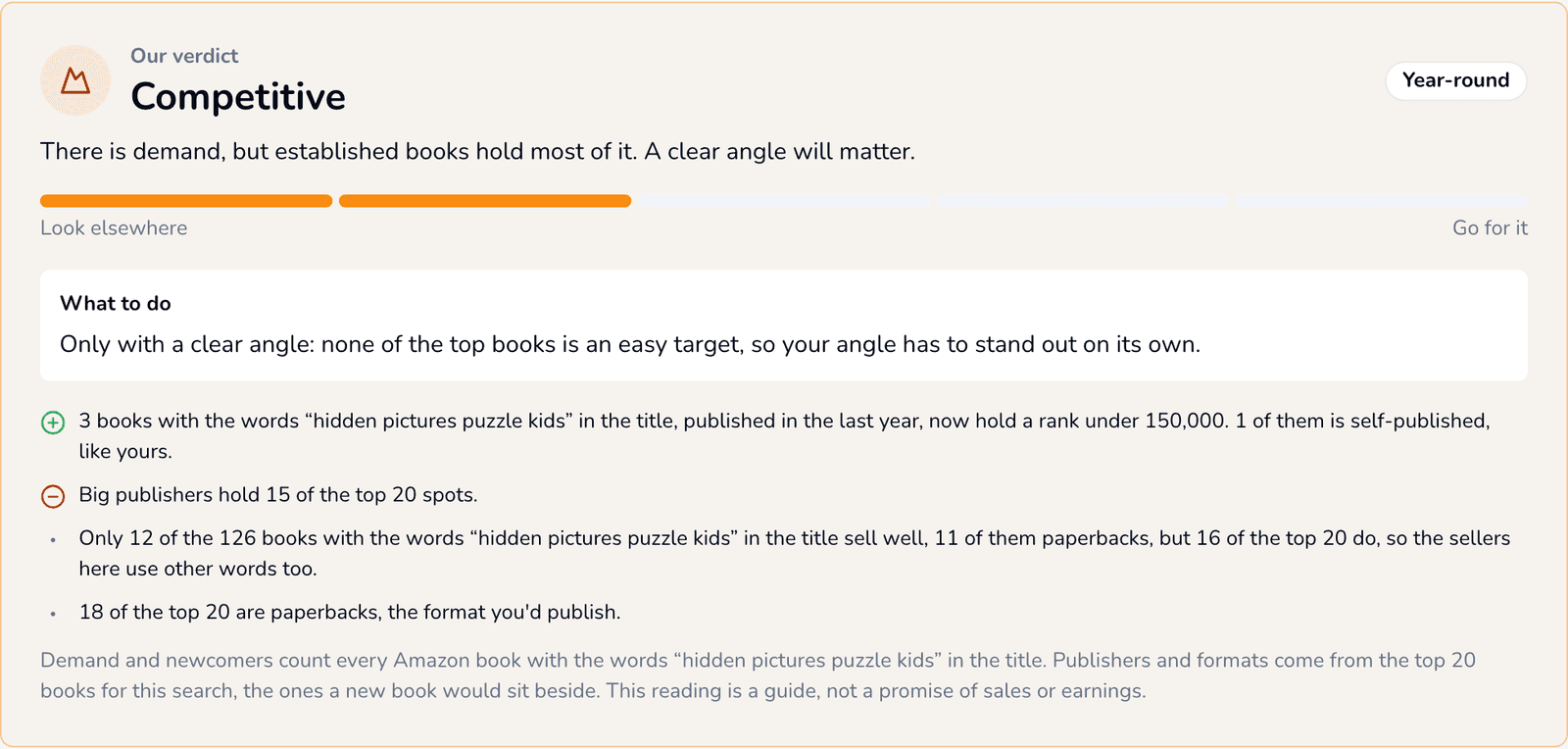
Competitive doesn’t mean impossible. It means you need a clear reason to exist: a narrower audience, a better format or a theme the big publishers skipped.
How do you check a niche in ColorCraft?
The by-hand method works; it’s just slow, and it only gives you today’s rank. Niche Research reads the same signals from a 90-day view of Amazon US sales ranks. Type a niche, and the report gives a verdict with its reasons, a suggested price and page count, and the words competing titles use.
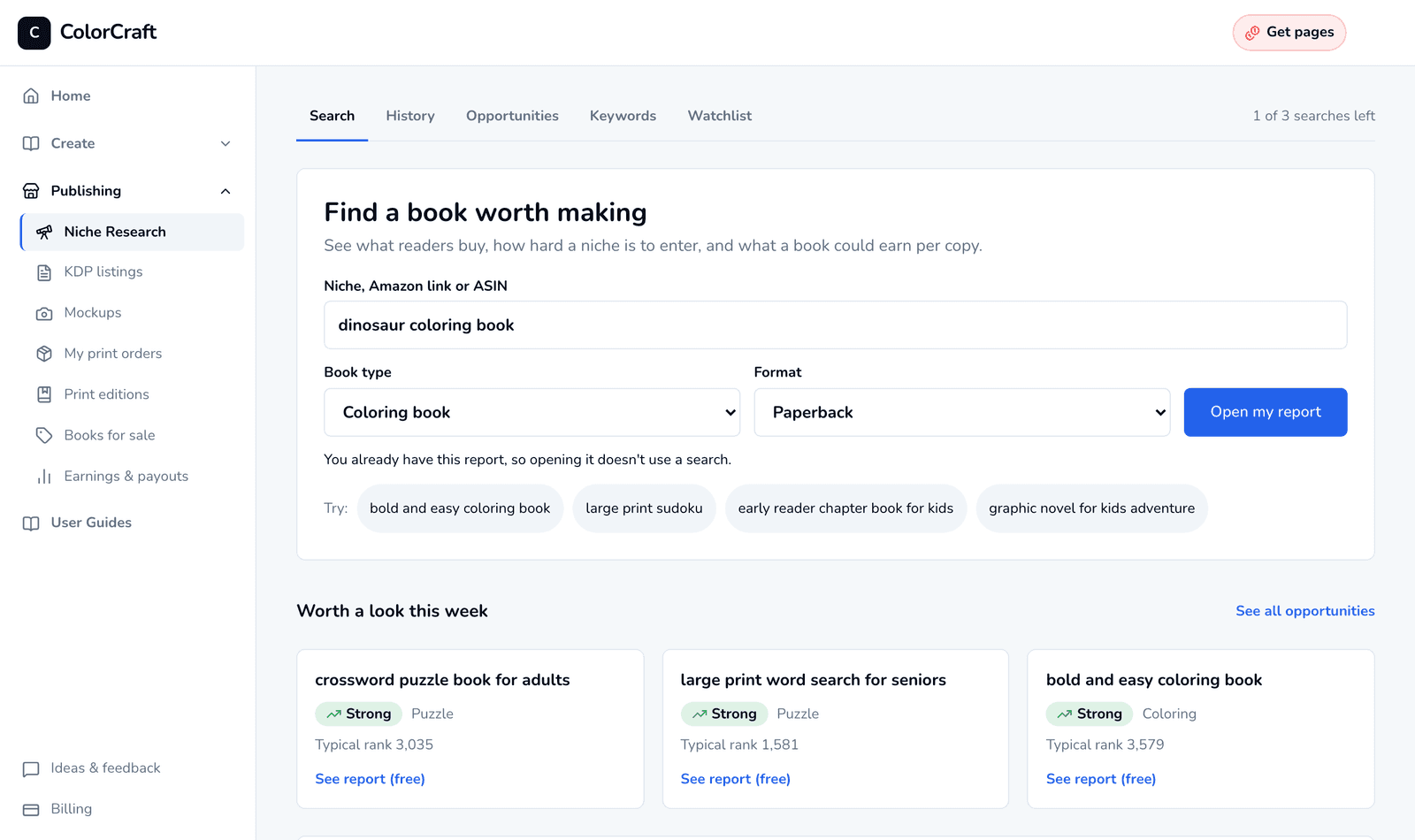
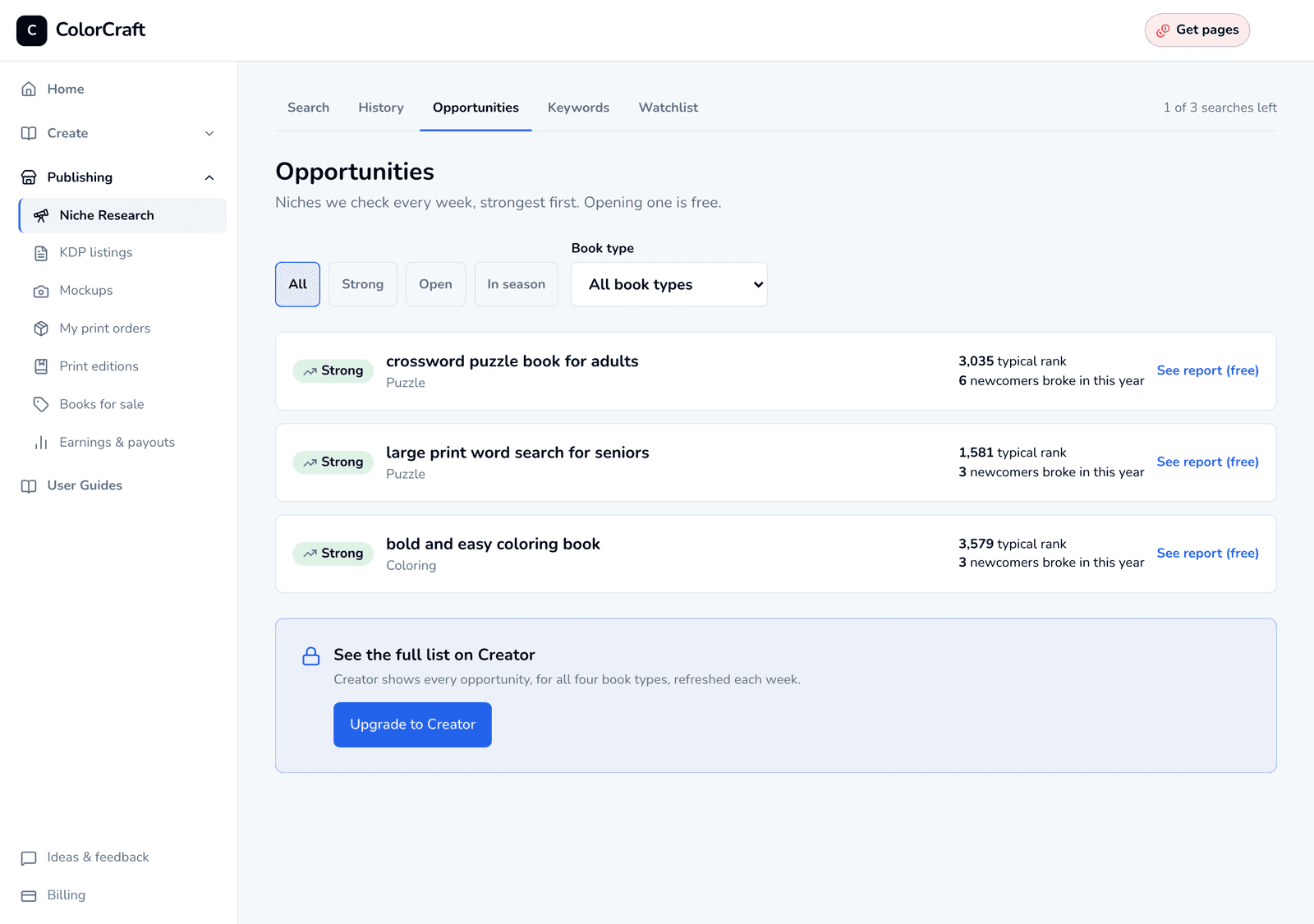
If you don’t have an idea yet, the Opportunities tab names niches checked every week, strongest first, with the full list on Creator and larger plans. When a report looks right, Start a coloring book takes the research into the book, so you aren’t retyping it.
It doesn’t show search volume, its sales estimates are ranges worked out from each book’s rank, and it covers Amazon US only. Mini, Starter and the free trial (a card is required to start it) include 3 searches in total. Creator includes 30 a month, Professional 100 and Studio 300.
Which mistakes waste the most time?
- Trusting one book. A single strong title can be a famous author or a one-off. Look for several.
- Reading one day’s rank. One sale can make a slow book look healthy for a day.
- Counting competitors instead of sellers. A niche with thousands of titles is fine if most aren’t selling.
- Starting too close to a holiday. Allow for KDP’s review time and time to show up in search.
- Choosing by your own taste alone. It’s a good place to start and a poor place to stop.
Once you have one, coloring book ideas for KDP has starting angles by audience, and how to sell coloring books on Amazon covers what comes next.
Frequently asked questions
What is the best niche for KDP?
There isn’t one best niche, and any list goes out of date as ranks move. Look for niches where several books hold a strong rank, recent small publishers have got in, and no licensed characters hold the top spots. Puzzle books for seniors and bold and easy coloring books read as Strong when we checked in November 2026, but check again before you publish.
How do I know if a KDP niche is too saturated?
Count the books with strong ranks, not the books that exist. A niche with thousands of titles can still be open if most aren’t selling and recent small publishers hold good ranks. It is too crowded when big publishers hold most of the top spots and nothing new has broken in during the last year.
What BSR is good for a KDP niche?
A common working line is a rank under 100,000 in the Books store, held over weeks rather than on one day. Look for several books at that level, not just one.
Can I do KDP niche research for free?
Yes. Amazon’s own search results show rank, price, page count, reviews and publication date for every book. It takes about 20 minutes per idea with a spreadsheet. Tools save time and add a longer view of rank, but they aren’t required.
How long does it take a new book to show up?
KDP says review can take up to 72 hours, and longer for an account’s first book. Finding an audience takes longer than that, so for a seasonal niche plan on publishing several weeks before the peak.
Sources
- KDP: Create a Book (title creation and submission limits)
- KDP: Timelines (review and publishing times)
- KDP: Intellectual Property Rights FAQ
- KDP: Sales Ranking
Last checked: . Policies, specs and rates were checked against these pages; KDP changes them from time to time, so confirm on KDP before you publish.
Make your first book with ColorCraft
Paige drafts and draws the pages, the cover generator builds the KDP wrap, and the Listing Assistant writes the description. Start a 7-day free trial and make a whole book.
Start your free trial7-day free trial · Card required · Plans from $9/month · Cancel anytime
Trial downloads are watermarked previews. The print-ready file comes with your plan, or unlock one book for $24.
Related guides
- What Is BSR on Amazon? A Guide for Book Publishers
How Best Sellers Rank works for books, rough ranges for what a rank means, and the traps in reading it.
- Coloring Book Ideas for KDP and How to Check What Sells
Niche ideas grounded in what ColorCraft publishers create most, plus a checklist for validating demand and competition on Amazon.
- How to Sell Coloring Books on Amazon
From niche check to listing: what sells, how to price it, and what a copy earns, by hand or in ColorCraft.